Sutherlands Organic Solutions
“We are a lawn care company committed to helping your lawn look its best and our earth help itself.”
SOS Helpful Hints
SOS Helpful Hints
To get the best results follow the steps below because, like us, your lawn is a living thing. It too needs food, water, and air to live.”
Forums.lawncare.com
50% depends on the nourishment given and the other 50% depends on the way it is cared for
Use A Sharp Blade Fight off pest and disease:
The type of mower does not matter, but the blades condition does. A dull blade tears at the grass. Take a close look at a grass blade a few days after mowing. If the blade is dull you will notice a jagged brown line across the tip of the grass. This is a good indication that your blade needs sharpening. Professional mowers sharpen their blades about every 8 hours of use. For most homeowners, twice a year is recommended. The jagged edges caused by a dull mower blade make it more difficult for the grass to fight off pest and disease.
Mowing Your Lawn Fundamental Step:
There is more to mowing than just cutting the grass every Saturday. One of the most fundamental steps to a perfect lawn is getting the mowing height right for the season. Mowing height is important because the grass uses the extra length to absorb the sunshine it needs to grow and develop into a healthy plant. Allow the grass to grow after May1st and continue to cut high in the hot months (no shorter than 3+ inches to prevent burning or drying thus maintaining the needed moisture); Therefore, follow the rule of thumb: cut low in the earlier part of spring (2 inches); cut high from late spring until late fall (3+ inches) and cut low again late fall (2 inches).
Leave the clippings on the lawn after you mow. This not only saves time and energy, but also the clippings decompose and add vital nutrients back into the soil. Clippings contain the same beneficial nitrogen, phosphorus and potassium nutrients as that expensive bag of fertilizer.
Watering Regulate the water intake and Rule of Thumb:
Over watering your lawn causes more damage than lack of water. That is because most turf grasses can handle dry spells, but not flooding. Most grasses require 1-1.5 inches of water per week. This is enough water to moisten the soil to 4-6 inches below the surface for clay soils and 8-10 inches for sandy soils.
Do not guess at how much water your lawn is getting. For measuring Mother Natures’ contribution, invest in a rain gauge. If at the end of the week she has contributed enough, hold off adding more water. If she comes up short, you will want to add some supplemental watering. If you have an irrigation system, measure how much water the sprinkler is putting down.
So, generally, you want your lawn to get about an inch of water per week. But remember certain times of the year and certain conditions can change that Rule of thumb. You must follow local regulations when there are watering bans, but just remember grass is a very resilient plant and less water is acceptable. When the rains do return, your lawn will come back with a little encouragement on your part. If you do not have an irrigations system, invest on timers and place on your faucets. This method will help you a ton.
Therefore, watering early morning gives the grass time to dry, eliminating a chance for fungus. Not enough watering will stress the lawn; prolonged drought weakens the root system and invites lawn diseases like necrotic ring. You will see brown patches and mistake it for grub damage. Refer to websites on grass diseases.
Keep Your Home Tick Free
We can treat your lawn for Flea & Ticks but you must do your part in checking the inside of your home for Ticks that have been living inside.
Follow the steps below to help to keep your home tick free:
Make sure to check your pets: Indoor pets, usually dogs, are the number one source of tick infestations. Dogs can carry ticks in from outdoors, or catch them from other animals in the kennel or the local neighborhood.
• Physically remove any ticks that are using your animal as a host, then treat the dog with a topical tick- killing product. Ask your veterinarian for suggestions.
• You may also invest in a tick- repelling collar for your pet. These will keep ticks from latching onto your cat or dog for approximately three months. Ask your veterinarian for suggestions.
• Thoroughly check your pet for ticks, including ears, and pads where they like to hide.
After You Come Indoors: You can bring ticks inside your house and they can stay in your house for weeks at a time. Check all clothes after being in places where ticks can be found. It is also important to check blankets and sheets where they can hide
• Drying your clothes first and then washing them is one way you can help rid your clothes of ticks. The heat cycle will kill the ticks, then wash your clothes.
• It is important to check yourself whenever you go outside to see if you are bringing in ticks from going to parks/public areas. Ticks may be on your body for days before they bite and like to hide in places that are warm and in your hair.
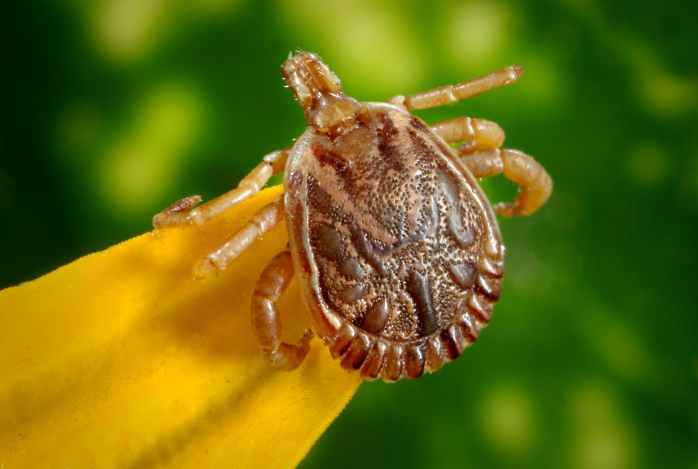
SOS – Prevent Ticks
Happy Spring!
Its that time of Season and Insects are coming out in full bloom!
Due to the warm winter, we will have an increase in the tick population this summer. Ticks were detected as early as January of this year, talk about getting an early start!
SOS is offering an early Insect Control Spray all this week. If you would like a Spray before Easter, call SOS (866-SOS-4030)
SOS Helpful Hints
Steps to Prevent Ticks
Step 1: Call us
We can prevent ticks from populating your lawn by starting Essentria IC3 application Late Spring to Early Summer. Applying a single treatment to your yard in Late May or Early June you can cut the tick population by over 50 percent.
Step 2: Clean-up
Are you providing Tick Heaven on your property? Let’s discourage ticks form taking up residence on your property. Ticks need shade somewhere in order to survive. Tick haven is damp dark areas such as; underneath brush and dead leaves. Therefore, do not allow piles of vegetation to build up anywhere in your yard, especially dead leaves.
Step 3: Cut Frequently
For a healthy lawn, mowing height is important. However, in the middle of the summer lawn height should be no shorter than 3 ½ inches. When your grass is allowed to grow longer, and not cut frequently to keep at the proper height, the lawn becomes another safe haven for ticks. Therefore, regular mowing denies ticks the shelter of tall grass and helps the sun evaporate the morning dew, this deprives the ticks of water. If at all possible water your lawn in the morning.
Step 4: Clean Bird Feeders
We never think of birdfeeders as a home for ticks. However, it is. Ticks can build a home under bird feeders without being disturbed. Therefore, it is important to thoroughly clean underneath.
Step 5: Confine firewood stacks
Firewood like brush and dead leaves provides the perfect darkness and moisture. Therefore, keeping your firewood stacked neatly and in a dry location will keep ticks away.
Step 6: Control over grown vegetation
Trim regularly and remove all dead, messy and overgrown vegetation. This will also help to keep ticks away from moving into the friendly foliage.
 Sutherlands Organic Solutions