Sutherlands Organic Solutions
“We are a lawn care company committed to helping your lawn look its best and our earth help itself.”
First Statewide CT Tick Study Finds Lyme Disease in Half of All Deer Ticks Collected
The study was funded by a one-year grant from the CDC.
By Siobhan McGirl • Published March 3, 2020 • Updated on March 5, 2020 at 10:05 am https://www.nbcconnecticut.com/news/local/first-statewide-tick-study-finds-lyme-disease-in-half-of-all-deer-ticks-collected/2232662/
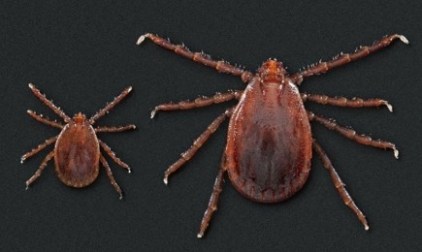
The CAES received a one year grant from the Centers for Disease Control and Prevention last year to conduct a statewide surveillance program for ticks and tick borne diseases.
“I think the CDC’s concern is that they are seeing an increase in the number of the reported tick borne disease cases,” said Scott Williams, a scientist at the CAES. Williams called the data set that the surveillance effort provided “invaluable.”
According to its website, the CDC estimates about 300,000 people get Lyme disease each year. A large portion of the cases are found in New England.
The surveillance effort, which spanned spring summer and fall of 2019, allowed the team to get a better idea of what ticks are in the state, where they are and what percentage are infected.
According to the team at the CAES, the deer tick remains the most popular in Connecticut. Of the 2,500 ticks that were collected, 2,068 were deer ticks. Dog ticks made up 437 of the collection. They also identified two new emerging species in Connecticut. They found three lone star ticks in the sample size and, for the first time, recorded an Asian longhorned tick in New London County.
- DEER TICK: 2,068
- DOG TICK: 437
- LONE STAR TICK: 3
- ASIAN LONGHORNED TICK: 2
The highest average adult deer tick density was found in Fairfield County.
Once the field team, overseen by Williams, collected the ticks, they were studied in a lab at the CAES. The ticks were tested for five different disease-causing pathogens.
According to the data, 46 percent of all adult deer ticks collected (2,068) were infected with Lyme disease. The adult deer ticks also tested positive for babesiosis (13%), anaplasmosis (9%), hard tick relapsing fever (2%) and Powassan encephalitis (1%).
“You need to be vigilant about protecting yourself from the exposure to ticks,” said Doug Brackney, an associate scientist who oversees the team that tests the ticks.
Williams explained that not only are more deer ticks being found infected with Lyme disease, less prevalent tick-borne diseases are also on the rise.
“They are kind of following the same trajectory as the Lyme disease pathogen,” said Williams. “It is just advancing exponentially and we are seeing them creep up to the level of Lyme disease.”
The new species of tick, Asian longhorned, found in New London County is known to host more on livestock than people. The tick is known to carry a dangerous disease in Asia, however no cases have been detected in the U.S.
“There is always the risk as, again, with climate change and the population starts to expand that there is more likelihood that we could see infections,” said Brackney.
Brackney and Williams explained that because it has been a mild winter, the exposure time for tick borne illnesses has expanded.
“You are seeing increased survival through out the winter because it is so mild that you are seeing more of them make it through the winter,” said Williams.
The CAES is still waiting to receive funding from the CDC to continue surveillance efforts for this year. Williams said that the data is not meant to create fear, but to inform.
“It is only getting worse. If we can be there with our finger on the pulse and document that change, we can maybe see some responses to it by health departments, federal government or something to maybe respond to this in some fashion,” said Williams. “If nothing else, to document and educate the public on it.”
They encourage people living in Connecticut to have exposure to ticks on their minds at all times, not just during a hike. “There is always a risk,” said Brackney.
The CDC created a Lyme disease prevention checklist, which includes checking your body for ticks, wearing tick repellent clothing and creating a tick-free zone in your yard.
Prevent Lyme Disease
Before gardening, camping, hiking, or just playing outdoors, make preventing tick bites part of your plans.
Lyme disease is spread by the bite of an infected tick. In the United States, an estimated 300,000 infections occur each year. If you camp, hike, work, or play in wooded or grassy places, you could be bitten by an infected tick.
People living in or visiting New England, the mid-Atlantic states, and the upper Midwest are at greatest risk. Infected ticks can also be found in neighboring states and in some areas of Northern California, Oregon and Washington. But you and your family can prevent tick bites and reduce your risk of Lyme disease.
Protect Yourself from Tick Bites: Know where to expect ticks. Blacklegged ticks (the ticks that cause Lyme disease) live in moist and humid environments, particularly in and near wooded or grassy areas. You may get a tick on you during outdoor activities around your home or when walking through leaves and bushes. To avoid ticks, walk in the center of trails and avoid walking through tall bushes or other vegetation.
Repel ticks on skin and clothing. Use Environmental Protection Agency (EPA)-registered insect repellents containing DEET, picaridin, IR3535, oil of lemon eucalyptus, para-menthane-diol, or 2-undecanone. EPA’s helpful search tool can help you find the product that best suits your needs. Always follow product instructions. Parents should apply this product to their children, avoiding hands, eyes, and mouth. Use products that contain permethrin on clothing. Treat clothing and gear, such as boots, pants, socks and tents with products containing 0.5% permethrin. It remains protective through several washings. Pre-treated clothing is available and may be protective longer.
- The Environmental Protection Agency (EPA) has an online tool to help you select the repellentexternal icon that is best for you and your family.
- For detailed information about preventing ticks on pets and in your yard, see Lyme Disease Prevention and Control.
- For detailed information for outdoor workers, see NIOSH Safety and Health Topic: Tick-borne Diseases.
Perform Daily Tick Checks: Check your body for ticks after being outdoors, even in your own yard. Search your entire body for ticks when you return from an area that may have ticks. Use a hand-held or full-length mirror to view all parts of your body and remove any tick you find. Take special care to check these parts of your body and your child’s body for ticks:
- Under the arms
- In and around the ears
- Inside the belly button
- Back of the knees
- In and around all head and body hair
- Between the legs
- Around the waist
Check your clothing and pets for ticks because they may carry ticks into the house. Check clothes and pets carefully and remove any ticks that are found. Place clothes into a dryer on high heat to kill ticks.
Remove Attached Ticks Quickly and Correctly is attached to your skin for less than 24 hours, your chance of getting Lyme disease is extremely small; however, other diseases may be transmitted more quickly.
Over the next few weeks, watch for signs or symptoms of Lyme disease such as rash or fever. See a healthcare provider if you have signs or symptoms. For more information, see tick removal.
Be Alert for Fever or Rash: Even if you don’t remember being bitten by a tick, an unexpected summer fever or odd rash may be the first signs of Lyme disease, particularly if you’ve been in tick habitat. See your healthcare provider if you have symptoms.
Prevent Ticks on Animals: Prevent family pets from bringing ticks into the home by limiting their access to tick-infested areas and by using veterinarian-prescribed tick prevention products on your dog.
PROMOTING THE VALUE OF GREEN SPACE

 • One tree can remove 26 pounds of carbon dioxide from the atmosphere annually.
 • Gardening and yard work contribute to healthy, active living both physically and emotionally.
 • 2,500 sq. ft. of turf releases enough oxygen for a family of four to breathe.
• Trees shading homes can reduce attic temperatures as much as 40 degrees
 • Lawns will be 30 degrees cooler than asphalt and 14 degrees cooler than bare soil in the heat of summer.
 • Smart Money magazine says that consumers value a landscaped home 11% higher than its base pace price.
 • A healthy sodded lawn absorbs rainfall 6 times more effectively than a wheat field and 4 times better than a hay field.
 • Turf grass, and a well-designed landscape, can increase a home’s property value by to 20%.
 • Proper landscaping reduces run off from the soil into the water supply.
• Grass plants are 75% water by weight.
 • Leaving grass clippings during mowing provides nutrients to help feed your lawn.
 • Studies have shown that physically active young people demonstrate higher academic at school performance at school.
 • Project EverGreen’s revitalization project have garnered more than a $600,000 in in-kind donations.
• A University of Pennsylvania School of Medicine study showed that people saw a reduction in heart rate when they walked by a lot that underwent “greening” -cleaning, debris removal, planting grass and trees, and installing a low wooden post- and rain-fence.
WWW.PROJECTEVERGREEN.ORG



SOS Natural Insect Control Treatments: Essentria IC3


Tired of dealing with those pesky pests?
Let us help!
Call Sutherlands Organic Solutions 401-764-0740/ http://www.soslawn.com/ info@soslawn.com
The information below is about the product we use for our Insect Control Sprays. It is a natural product and is not harmful to pets, children or adults.
Essentria IC3: Kills Crawling and Flying Insect Pests
Essentria IC3 is an all -Natural Insecticide with ingredients that kills crawling and
flying insects on contact and creates a barrier that repels others.
- Safe and Effective: When used as directed
- Quick Control with residual protection
- Multi-Purpose: for indoor, outdoor, fogging, turf and ornamental, on animal and mosquito misting applications.
- Contains natural essential plant oils with fresh scent
ACTIVE INGREDIENTS:
Rosemary Oil……………………………………………………………………………..………….10.00%
Geraniol………………………………………………………………………………………………….5.00%
Peppermint Oil…………………………………………………………………………………………2.00%
OTHER INGREDIENTS:
Wintergreen Oil, White Mineral Oil, Vanillin, Polyglycerol Oleate………………83.00%
Total:…………………………………………………………………………………………….…. 100.00%
For more information on Essentria IC3 please visit our website for material safety and data sheet Or ENVINCIO website below for the full disclosure of product label information.
SOS Offered Programs- Guaranteed Organic Based & 100% Organic Based
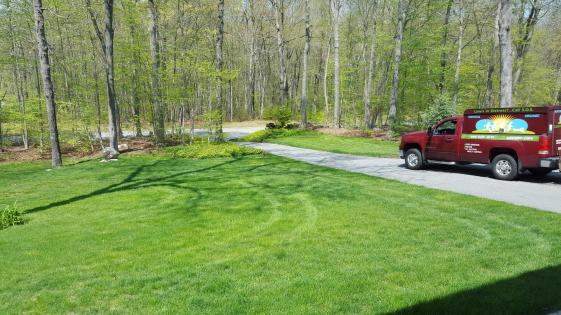
“We are a lawncare company committed to helping your lawn look its best and our earth help itself.”
We offer two Lawncare Programs: Guaranteed Organic Based & 100% Organic Based
Our materials are environmentally safe for families and pets
Our Guaranteed Organic Based Program Includes the following 6 applications: (Fertilizer, Crabgrass Prevention, Summer Weed Control, Grub/Insect Prevention & Lime):
1. Early Spring Fertilizer with Crabgrass Prevention
2. Late Spring Fertilizer with Crabgrass Prevention/Summer Weed Control
3. Early Summer Fertilizer – Grub & Insect Prevention with Summer Weed Control
4. Late Summer – Double Service (Lime & Fertilizer) with Summer Weed Control
5. Early Fall Fertilizer with Summer/Fall Weed Control
6. Late Fall – Double Service (Lime & Fertilizer) with Summer/Fall Weed Control
Fall Core Aeration & Over-Seeding (Recommended)
Natural Insect Spray Essentria IC3 (As Requested Only)
Please keep in mind our Fertilizer promotes healthy growth of all turf grass and weed types. While our weed control, will help to combat the Summer weeds, there is a chance that not all weeds will be eliminated within a Season. Eliminating weeds does take time and we need the homeowners help to do so. A Helpful Hint to eliminate weeds on your lawn this Sumer Season will be to keep your lawn cut at a high length of at least 3 ½ “+ no shorter. Weeds thrive in short length, the longer the grass the less sunlight the weeds will have to promote growth. In order to help us do a good weed control application on your lawn this Season, please try to mow your lawn after our scheduled Application, the longer the grass the better weed control application we can apply, as we will be able to target the weeds tissue. Best time to Mow: Mid-Morning 8:00am- 10:00am: Ideal time of day to mow your lawn. Waiting till mid-morning allows for the morning dew and irrigation to dry. Its best to mow the lawn before the heat of the day sets in. Also, consider getting your lawn Aerated & Seeded (A/O) this Season. Even if it isn’t with us, Fall Aeration & Seeding is the best cultural practice and the most natural way to combat weeds. If you do go to a 3rd party for the Fall A/O or you decide to do it yourself, please contact us and we can provide you with the best Grass Seed to use so you get great results.
Our 100% Organic Based Program (Lime & Fertilizer Only) Includes the following 6 applications:
1. Early Spring Fertilizer Only
2. Late Spring Fertilizer Only
3. Early Summer Fertilizer Only
4. Late Summer – Double Service (Lime & Fertilizer)
5. Early Fall Fertilizer Only
6. Late Fall – Double Service (Lime & Fertilizer)
Fall Core Aeration & Over-Seeding (Highly Recommended)
Natural Insect Spray Essentria IC3 (As Requested Only)
Please keep in mind our Fertilizer promotes healthy growth of all turf grass and weed types. Without weed control, your lawn might experience a weedy season. Our advice to eliminate weeds on your lawn this Sumer Season is to keep your lawn cut at a high length of at least 4”. Weeds thrive in short length, the longer the grass the less sunlight the weeds will have to promote growth. Also consider getting your lawn Aerated & Seeded (A/O) this Season. Even if it isn’t with us, Fall Aeration & Seeding is the best cultural practice and the most natural way to combat weeds. If you do go to a 3rd party for the Fall A/O or you decide to do it yourself, please contact us and we can provide you with the best Grass Seed to use so you get great results.
Breakdown of our Materials:
- Our Fertilizer is Organic Based
- Our Pesticide is a Natural Product
- Our Weed Control is a low Toxicity Chemical. Therefore, the Weed Control is only applied where needed on the property. We never do a blanket application unless requested by homeowner. (Our Weed Control is only strong enough to kill weeds not grass.) The material only needs 3 hours of drying time then it is safe for adults, children and pets to be on the property.
• Our Grub Prevention is a low Toxicity Chemical. This application is only applied once throughout the Season and this is the only application, we ask you to water in once it has been completed. (Our Grub Prevention is so low in toxicity that its only strong enough to dissolve the beetle egg, not the actual grub.)
Please call SOS 401-764-0740 / info@soslawn.com / http://www.soslawn.com for FREE LAWN ANALYSIS with ESTIMATE
Licensed in MA, CT RI and comply with all state regulation
How to Kill Grass/Weeds Invading a Flower Bed -Using Natural Alternatives
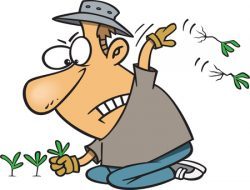
Unwanted grass/weeds invading your flower bed is a nuisance. Fortunately, you don’t have to spend the whole growing season on your hands and knees pulling out grass/weeds. By using newspaper to smother the grass, or applying selective herbicides to your flower bed, you can begin to take your flower bed back from invading weeds.
Here are 2 Helpful Options to rid your flower beds from pesky grass/weeds:
Option 1:
1. Lay down sheets of newspaper over the invasive grass/weeds. Make the newspaper barrier around four sheets thick for the best results. Leave room around the bases of the flowers in the flower bed. If you don’t have a lot of newspaper lying around, try getting some at your local recycling plant.
2. Wet the sheets of newspaper with a hose. Get them wet enough that they won’t blow away in the wind. Getting the newspapers wet will also help them decompose faster, which will be good for your flower bed.
3. Add a three-inch (7.6 cm) layer of mulch over the newspaper. You can use any type of mulch, like shredded wood chips, leaves, or compost.
4. Pull out any grass/weeds that manages to grow through the newspaper. If you don’t want to pull out the grass/weeds by hand, try using an herbicide to kill the grass/weeds and stop it from spreading.
5. Repeat the process every year to prevent new grass/weeds from growing. Lay down more newspaper, smothering any existing grass/weeds in the flower bed, and add a fresh layer of mulch.
Option 2:
1. Pour boiling water onto the grass/weeds. One natural way to kill your grass/weeds only requires water. Fill a pot with water and bring it to a boil on the stove. Then, carefully carry the pot to the flower bed and pour the water directly onto the grass/weeds. Be extremely cautious when handling the water, as it can burn you if you spill it on yourself. Do not pour any hot water onto your flowers, or you may accidentally kill them as well. Refill the pot with water and boil it if you don’t cover all of the grass/weeds with the first pot of water.
2. Spray a vinegar mixture onto the grass/weeds. To create a natural vinegar mixture that should be able to kill your grass/weeds, mix together 1 gallon (3.8 l) of white vinegar and 1 cup (240 ml) of table or rock salt. Stir in 1 tablespoon (15 ml) of dish soap and pour the mixture into the body of a garden sprayer. Spray your unwanted grass/weeds directly with the sprayer.
3. Cover the grass/weeds in lemon juice. Lemon juice is another chemical-free option that may be able to kill your grass/weeds. Douse the grass/weeds in lemon juice and then check on the grass/weeds after 1-2 days. By this time, the grass/weeds should be mostly dead. If not, repeat the process until you’ve achieved your desired results.
https://www.wikihow.com/Kill-Grass-Invading-a-Flower-Bed
Co-authored by: Maggie Moran
 Sutherlands Organic Solutions