Sutherlands Organic Solutions
“We are a lawn care company committed to helping your lawn look its best and our earth help itself.”
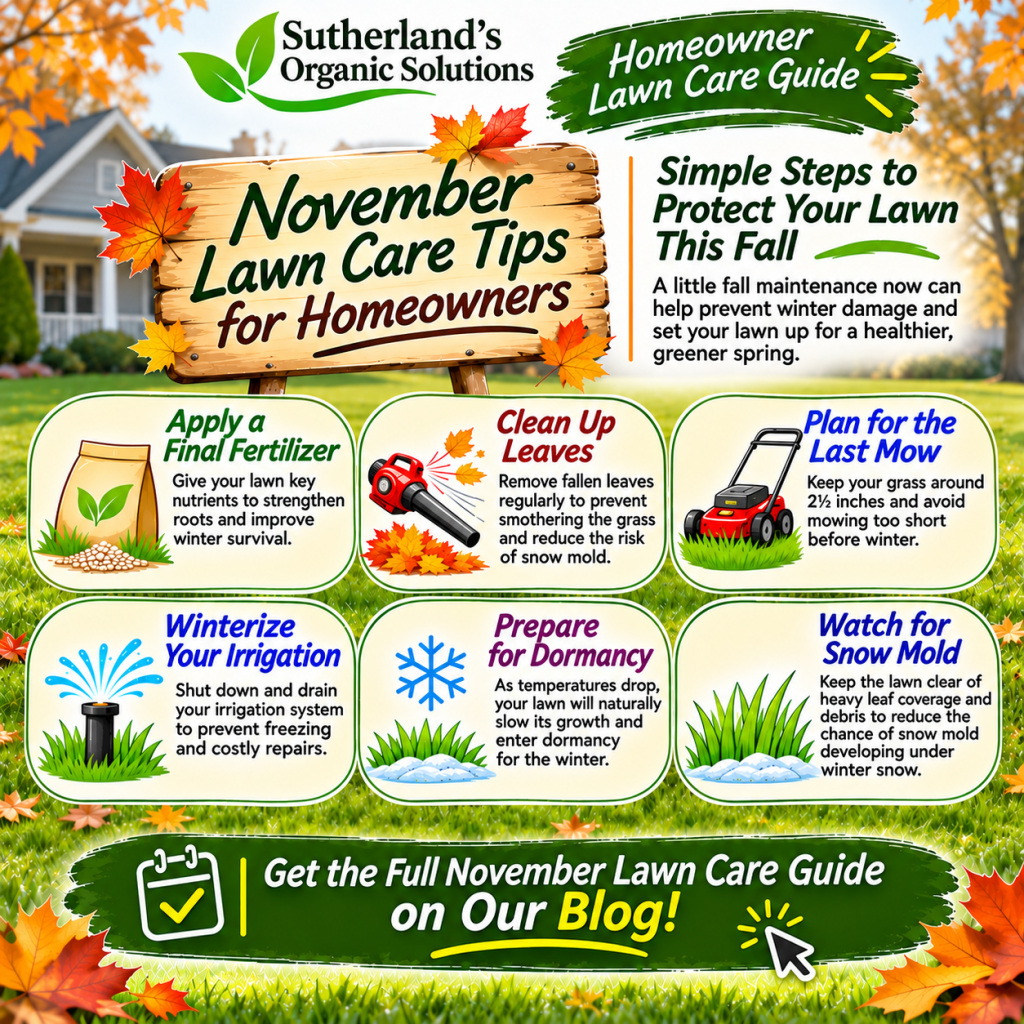
🍁🌱 NOVEMBER LAWN CARE TIPS: PREP TODAY FOR A HEALTHIER, GREENER SPRING! 🌱🍁
❄️ Winter is right around the corner! Is your lawn ready?❄️
As temperatures drop, leaves continue to fall, and the growing season ends, November is a great time to give your lawn a little extra attention before winter settles in.
At Sutherland’s Organic Solutions, we believe a beautiful, healthy lawn starts with year-round care. While your grass may be slowing down, you can still take a few important steps now to protect your lawn from winter damage and encourage a stronger, greener comeback next spring! 💚
🍂 1. Keep Up with Leaf Cleanup
Those beautiful fall leaves may look harmless, but thick layers can block sunlight, trap moisture, and smother your grass.
Regularly mulch or blow leaves off your lawn to help maintain proper airflow and reduce the risk of fungal diseases, including snow mold.
🌱 2. Give Your Lawn Its Final Seasonal Care
Late fall is an important time for root development and nutrient storage. Even though the grass above ground is growing more slowly, the roots may still be active!
A properly timed late-season fertilizer application, when appropriate for your lawn, can help replenish nutrients, support healthy roots, and prepare your grass for the colder months ahead. Remember, a healthier root system today means a stronger foundation for spring!
🚜 3. Prepare for the Final Mow of the Season
Don’t put the mower away just yet! As grass growth slows, monitor your lawn and plan one final mow before winter dormancy.
For many cool-season lawns, a final mowing height of approximately 2½ inches can help reduce the risk of matting and snow mold without cutting the grass too short. Avoid scalping your lawn and never remove more than one-third of the grass blade in a single mowing.
💧 4. Winterize Your Irrigation System
Freezing temperatures can seriously damage irrigation pipes, sprinkler heads, and other components if water is left in the system.
If you have an underground irrigation system, make sure it’s properly shut down and winterized before freezing weather arrives. Taking this precaution now can help prevent expensive repairs when spring returns!
❄️ 5. Protect Your Lawn During Winter Dormancy
As temperatures continue to drop, your lawn will gradually enter dormancy, a natural resting period that helps grass survive the winter. Once the ground freezes, try to minimize heavy foot traffic, equipment use, and unnecessary activity on the lawn. Frozen grass is more vulnerable to damage, and repeated traffic can contribute to soil compaction and turf injury.
🍃 6. Help Prevent Snow Mold and Winter Damage
Snow mold is a fungal disease that can develop under prolonged snow cover, especially when leaves, debris, or excessive growth mat the grass down.
Keeping your lawn clear of heavy leaf accumulation, avoiding excessive late-season nitrogen, and maintaining an appropriate mowing height can help reduce the risk. A little extra attention now can make a noticeable difference when the snow melts!
🌿 WHY NOVEMBER LAWN CARE MATTERS
It’s easy to assume that lawn care ends when the grass stops growing, but the steps you take during the final weeks of fall can have a lasting impact on your lawn’s health.
Proper seasonal maintenance can help support stronger, healthier roots while reducing the risk of winter damage and minimizing conditions that encourage snow mold. It also helps protect your lawn from unnecessary stress during the colder months, encourages a healthier spring green-up, and gives your lawn a stronger start to the next growing season!
🍁 A LITTLE PREPARATION NOW CAN MAKE A BIG DIFFERENCE NEXT SPRING! 🌱
At Sutherland’s Organic Solutions, we’re passionate about helping homeowners understand their lawns and make informed decisions about proper seasonal care.
Whether you maintain your lawn yourself or work with a professional lawn care provider, understanding what your grass needs year-round is one of the best ways to support long-term lawn health.