Sutherlands Organic Solutions
“We are a lawn care company committed to helping your lawn look its best and our earth help itself.”
Snow Mold: What, Why and The Fix
❄️ What Is Snow Mold?
Snow mold is a group of fungal diseases that develop under snow cover when the ground isn’t frozen. The two main types are:
- Gray snow mold (Typhula species)
- Pink snow mold (Microdochium nivale)
🌱 Why Snow Mold Is Harmful
1. Kills or Weakens Grass
Snow mold attacks grass blades and crowns, causing:
- Circular patches of dead or matted grass
- Slow spring green-up
- Increased vulnerability to other diseases and weeds
Pink snow mold is especially damaging because it can kill grass plants outright.
2. Thrives in Common Winter Lawn Conditions
Snow mold develops when:
- Snow sits on unfrozen soil
- Lawns have heavy thatch or compacted soil
- Grass is left too tall before snowfall
These conditions create a moist, insulated environment ideal for fungal growth.
3. Creates Long-Lasting Lawn Damage
Even after snow melts, affected areas may:
- Remain brown or gray for weeks
- Recover unevenly or not at all
- Require reseeding or renovation
This delays a healthy, uniform lawn in spring.
4. Encourages Secondary Problems
Damaged turf makes room for:
- Weed invasion
- Soil erosion
- Other lawn diseases
How to Reduce Snow Mold Damage
- Mow grass shorter (but not scalped) before winter
- Avoid late-season nitrogen-heavy fertilizer
- Reduce thatch buildup and improve drainage
- Rake and lightly fluff matted grass after snow melt
Bottom Line
Snow mold weakens your lawn’s root system and delays spring recovery, leading to thin turf and extra maintenance. While many lawns recover naturally, repeated infections can cause lasting damage if prevention steps aren’t taken.
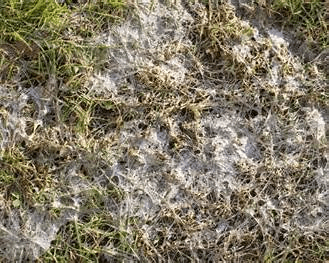
Here are images showing what snow mold looks like on lawns and turfgrass — the fuzzy, matted patches of grass that appear when snow melts in late winter or early spring:
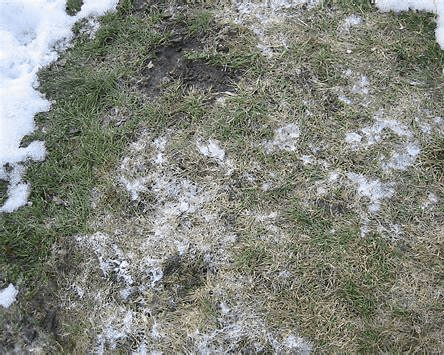
These pictures show typical snow mold symptoms on grass, such as:
- Circular, straw-colored or tan patches of dead, matted grass.
- Grayish or whitish fuzz/mycelium on the surface of the turf.
- Spiderweb-like fungal growth in affected areas.
- Sometimes pinkish tones in pink snow mold types.
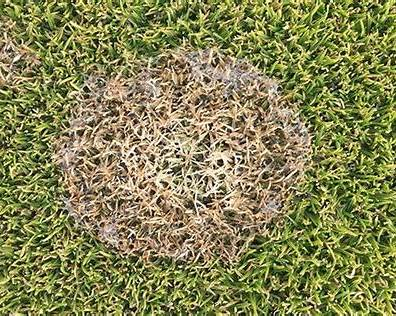
Snow mold is a fungal lawn disease that becomes visible after prolonged snow cover melts, leaving discolored and matted grass where the fungi thrived beneath the snow.
 Sutherlands Organic Solutions